> ## Documentation Index
> Fetch the complete documentation index at: https://docs.logictwelve.com/llms.txt
> Use this file to discover all available pages before exploring further.
# Usage
> Use Stoplight Elements for Confluence day to day
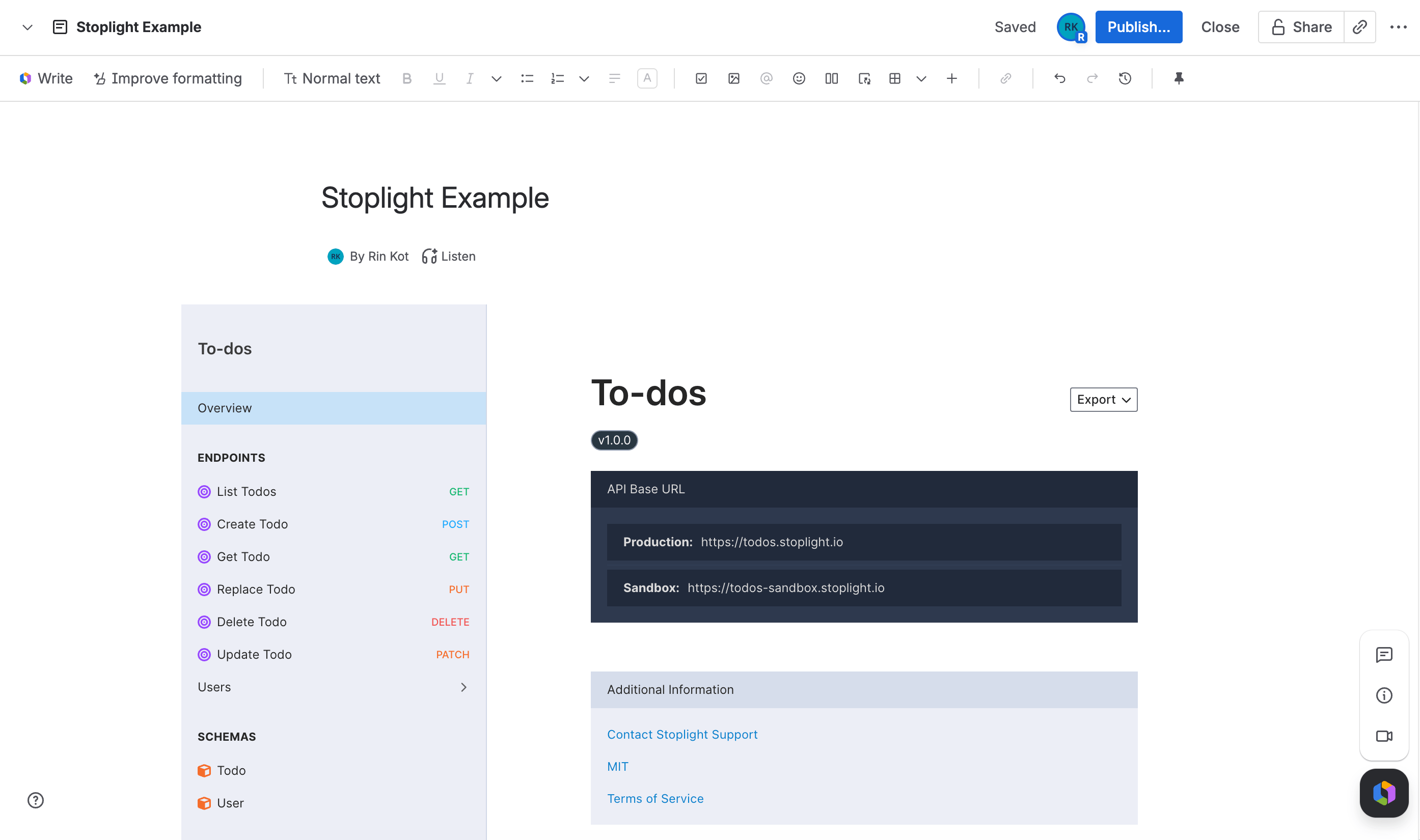
Page viewers see either a three-panel API reference (endpoints, schemas, and a **Try It** console) from the **Stoplight Elements** macro, or a full embedded dev portal from the **Stoplight Elements Dev Portal** macro — rendered in place, with no Confluence-specific chrome around it.
If a macro is missing required configuration, viewers see a configuration warning instead. If the site doesn't have an active license, they see a license warning instead — see [Licensing](#licensing).
## Adding the macro to a page
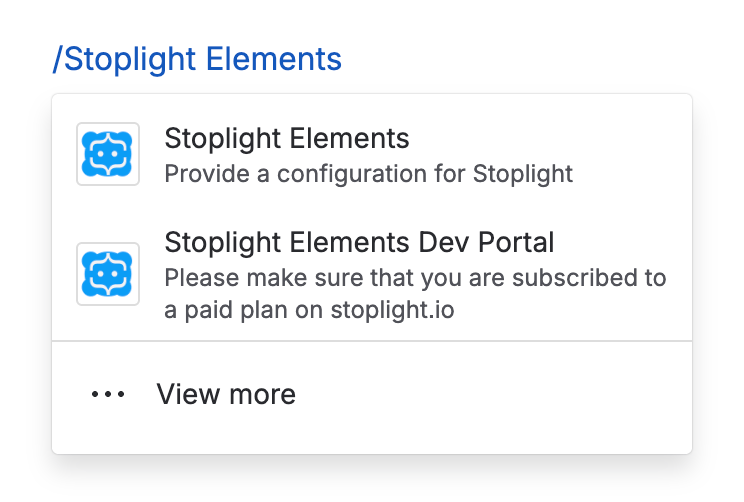
While editing a page, type `/` or click the **+** in the editing toolbar.
Search for "Stoplight Elements" and select **Stoplight Elements** or **Stoplight Elements Dev Portal**:
 Fill in the config form — see [Configuration](/stoplight-confluence/configuration) for every field.
Click **Save** on the macro, then save the page to make the rendered documentation visible to viewers. Here's how the Elements macro looks once published:
Fill in the config form — see [Configuration](/stoplight-confluence/configuration) for every field.
Click **Save** on the macro, then save the page to make the rendered documentation visible to viewers. Here's how the Elements macro looks once published:
 ## Keeping it updated
How the macro stays current depends on what you pointed it at:
* **API Description URL** (Elements macro) or **Project ID** (Dev Portal macro) — fetched live every time someone views the page, so changes to the underlying spec or Stoplight project show up automatically. There's nothing to republish.
* **API Description Document** (pasted YAML/JSON, Elements macro only) — stored as a static snapshot in the macro's configuration. It only changes when you reopen the macro and paste in the updated content.
## Licensing
The app uses Confluence's built-in Marketplace licensing. If a site doesn't have an active license or trial, every instance of either macro shows a license warning instead of rendering.
## Tips
Use **Document** instead of **URL** on the Elements macro and paste the OpenAPI YAML or JSON directly into the config.
Confluence pages default to a fixed width. Use the page options menu to switch the page to **Go wide** or **Go full width** instead of changing the macro's own settings.
Turn on **Hide Try It** in **Filter** to remove the interactive console and present a reference-only view.
## Keeping it updated
How the macro stays current depends on what you pointed it at:
* **API Description URL** (Elements macro) or **Project ID** (Dev Portal macro) — fetched live every time someone views the page, so changes to the underlying spec or Stoplight project show up automatically. There's nothing to republish.
* **API Description Document** (pasted YAML/JSON, Elements macro only) — stored as a static snapshot in the macro's configuration. It only changes when you reopen the macro and paste in the updated content.
## Licensing
The app uses Confluence's built-in Marketplace licensing. If a site doesn't have an active license or trial, every instance of either macro shows a license warning instead of rendering.
## Tips
Use **Document** instead of **URL** on the Elements macro and paste the OpenAPI YAML or JSON directly into the config.
Confluence pages default to a fixed width. Use the page options menu to switch the page to **Go wide** or **Go full width** instead of changing the macro's own settings.
Turn on **Hide Try It** in **Filter** to remove the interactive console and present a reference-only view.